
Oliver Stone
August turned out to be a month of sharp reversals and some genuinely surprising policy moves. The US Treasury intervened in the bond market, gold staged one of its best monthly performances in years, and UK mid-cap stocks quietly hit record highs. For UK investors, the overall picture was more positive than the headline FTSE 100 number suggests, and the story behind the numbers is worth unpacking.
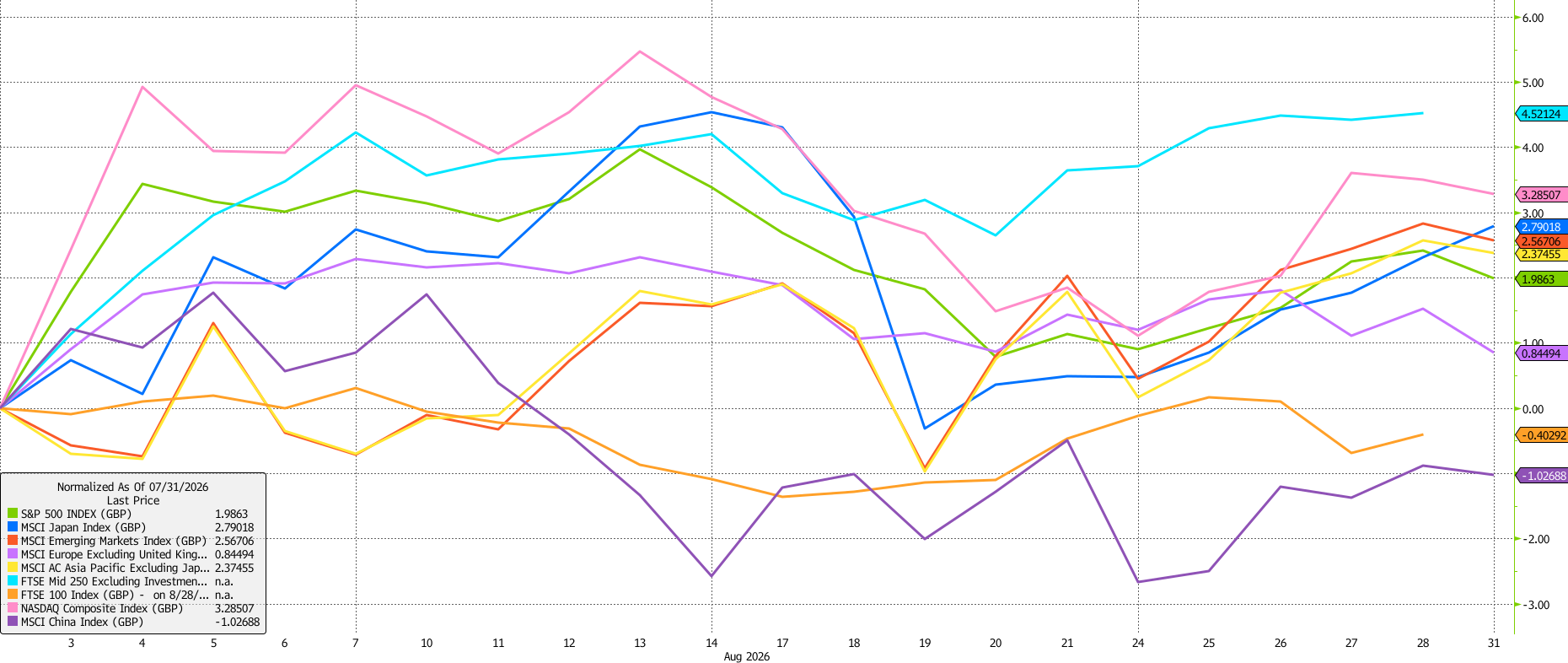
The standout performer for UK investors was right on their doorstep. The FTSE 250 gained 4.5% in August, hitting multiple record closes during the month and comfortably outpacing its larger sibling. The mid-cap index was lifted by a combination of factors that don’t tend to show up in the FTSE 100: domestically-focused companies benefiting from a resilient UK economy, a wave of M&A activity with smaller names increasingly in the crosshairs of acquirers, and a boost from housebuilders after the government announced £10 billion in housing funding. Stocks like WPP and easyJet were among the individual contributors. The FTSE 250’s strong run is a reminder that the UK equity market is not a monolith; while the large-cap index is heavily influenced by global commodity prices and dollar earnings, the mid-cap index is a much purer play on the domestic economy, and that economy has been holding up better than many feared.
The FTSE 100, by contrast, slipped -0.4%. Its energy and mining exposure, which was such a tailwind in July, became more of a drag as oil prices went sideways and the commodity complex was mixed. It was a month where the index’s global character worked against it relative to the more domestically oriented 250.
Elsewhere, the S&P 500 returned 2.0% in GBP terms, though the journey was far from smooth. US stocks weathered a mid-month bond market scare, signs of consumer softness and growing scepticism about the AI trade, before Nvidia’s earnings late in the month revived the narrative and pushed the index into positive territory. The AI complex is increasingly splitting in two – Nvidia and a handful of others continuing to deliver, while the broader cohort faces harder questions about the cost of building out the infrastructure. Sterling’s modest strength against the dollar trimmed the return slightly for UK investors.
MSCI Emerging Markets had its best August since 2004, gaining 2.6% in GBP terms, as global investors continued to diversify away from dollar-denominated assets and commodity tailwinds supported several EM economies. MSCI Japan delivered 2.8% in GBP terms – a solid local return of 3.6% in yen, though the yen’s continued weakness against sterling trimmed the outcome for UK investors. MSCI China gave back some of July’s bounce, slipping -1.0% in GBP terms.
Moving over to bond markets, and the headline numbers for government bonds look deceptively calm. The 10-year gilt yield ended August at 5.06%, barely changed from the 5.05% it started the month at. The 10-year US Treasury yield moved similarly, edging from 4.74% to 4.75%. But those end-points mask an extraordinarily volatile month in between.
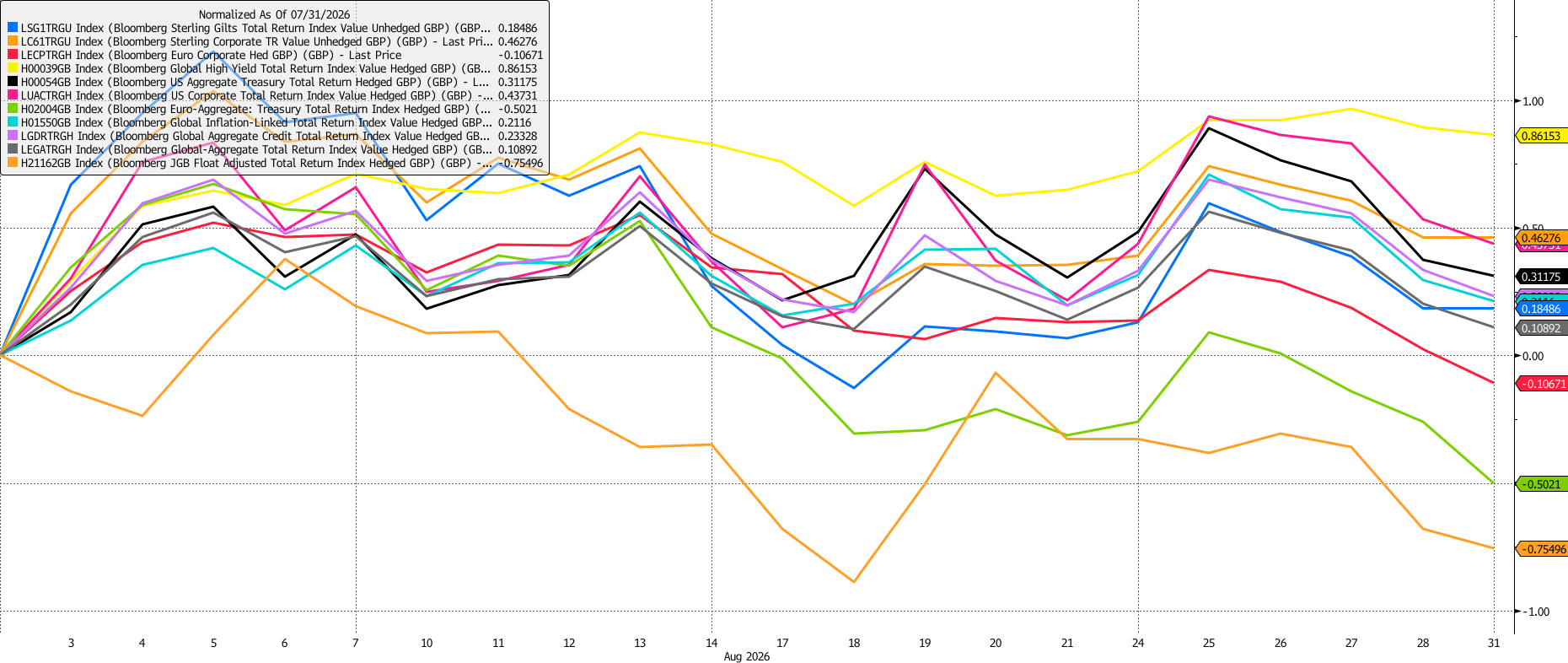
Mid-month, the US 30-year Treasury yield hit a 19-year high of 5.32%, as concerns about the sheer volume of US government debt issuance and persistent inflation pressures drove a global bond selloff. Australian and New Zealand bonds fell in sympathy, and Japan’s 10-year yield climbed to multi-decade highs. It felt, briefly, like the bond market was sending a serious warning signal about US fiscal sustainability.
Then came the surprise. US Treasury Secretary Scott Bessent announced an unexpected ramp-up in buybacks of long-dated government debt – a move widely interpreted as an attempt to cap long-end yields before they caused broader economic damage. The announcement sent 30-year yields sharply lower and provided meaningful relief to bond markets globally. By month-end, the “Bessent bounce” had become a genuine talking point, with key market metrics showing the intervention was having a measurable impact on Treasury spreads. The debate about its long-term effectiveness continues, but in the short term it worked.
For UK gilt investors, the domestic picture was somewhat more benign. UK CPI data released in August came in broadly in line with forecasts, and Governor Bailey used his appearance at the Jackson Hole conference to play down the risk of significant second-round inflation effects, citing a softening labour market as UK employers reportedly shed around 13,000 workers from payrolls in July. The Bank of England’s next rate decision is on 17th September, and markets are pricing only a modest probability of a further hike.
Sterling had a quiet but slightly positive month in currency markets. GBP/USD edged up from $1.348 to $1.355, a gain of around 0.5%, as the dollar came under pressure following the Bessent bond buyback announcement and a run of softer US economic data that briefly caused markets to stop fully pricing in another Fed rate hike. Against the euro, sterling was down 0.28%, slipping marginally from €1.170 to €1.166.
The yen remained under pressure for much of the month despite the dramatic intervention at the end of July. Rising US real yields continued to weigh on the currency, and the JPY/GBP rate moved further against Japanese assets in sterling terms which is why MSCI Japan’s solid local return of 3.6% translated into a more modest 1.7% for UK investors. Japan’s use of the Fed’s repo facility to support the yen – using Treasury holdings as collateral rather than selling bonds outright – was an innovative approach that reportedly helped protect the US bond market from additional selling pressure.
The broader dollar story in August was one of credibility questions. The Bessent buyback move revived concerns about dollar debasement, and global investors continued to diversify away from US dollar assets; a trend that benefited both gold and emerging market currencies.
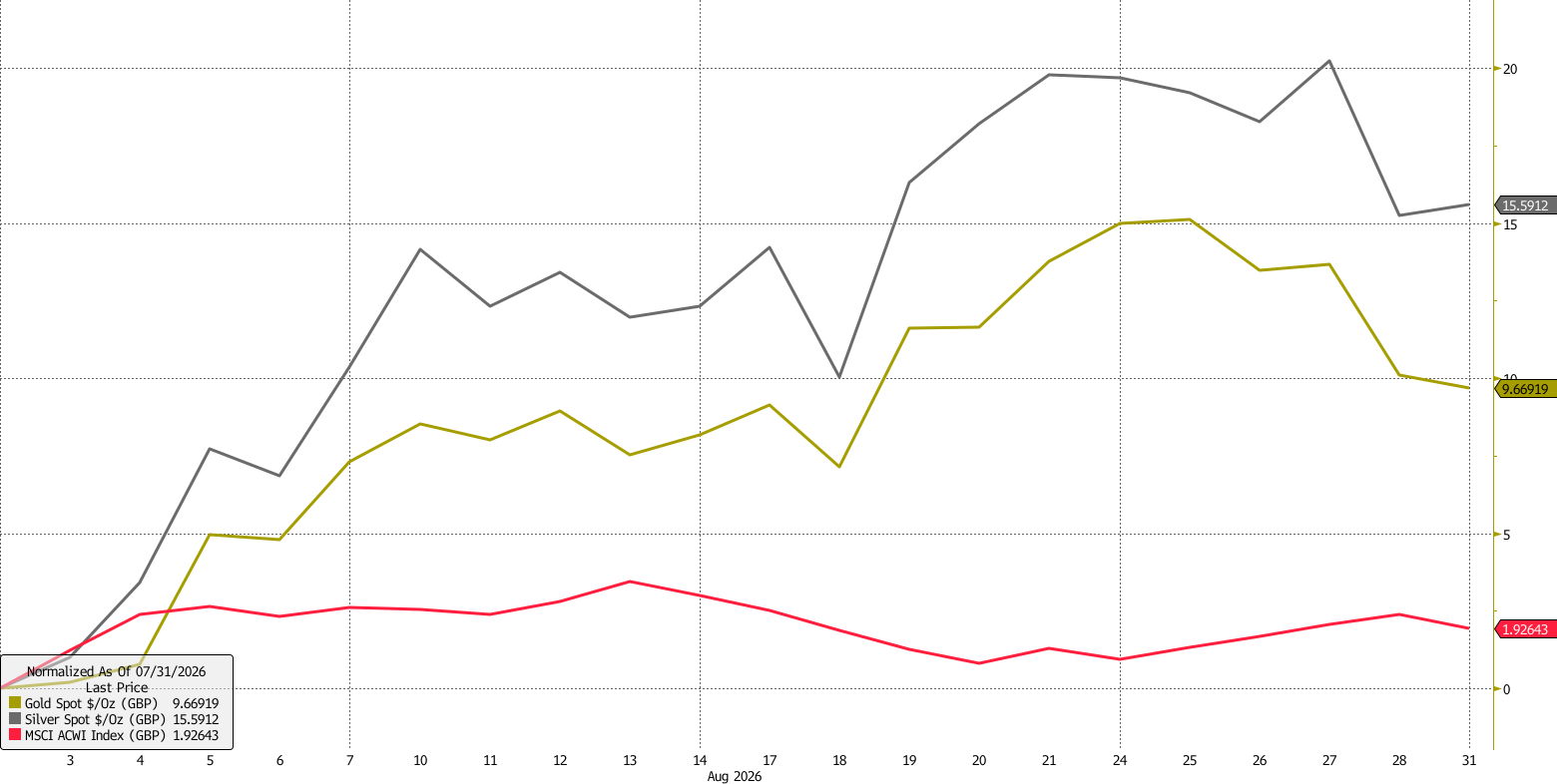
The commodity story of August was almost entirely about gold. Brent crude was essentially flat on the month, ending at $90.49 versus $90.12 at the start; a gain of less than half a percent. The Strait of Hormuz situation remained unresolved, with stop-start negotiations keeping oil in a holding pattern. A brief flare-up of US-Iran strikes on the final day of August sent oil higher and gold lower in the last session, but neither move was enough to materially shift the monthly outcome.
Gold, by contrast, had a remarkable month. The metal rose by nearly 10%, driven by a confluence of powerful forces. The Bessent bond buyback announcement was the single biggest catalyst, sending the dollar lower and reviving the dollar debasement narrative. But the move was also underpinned by strong structural demand: central banks continuing to accumulate, ultra-high-net-worth investors reportedly rotating out of bonds into gold, and ETFs tracking gold and Bitcoin attracting a record $7 billion in inflows over just five trading days. Gold hit intra-month highs around $4,700 before pulling back on the final day as Middle East tensions flared again.
August was a month that raised some important longer-term questions. The US Treasury’s intervention in the bond market – however effective in the short term – added to a growing sense that the traditional safe-haven status of US assets is being questioned. Gold’s surge, the rush into alternative stores of value, and the continued diversification away from the dollar all point in the same direction. For UK investors, this is not necessarily bad news: a weaker dollar tends to support sterling, and the UK’s domestically-focused mid-cap stocks are relatively insulated from these global macro crosscurrents. The FTSE 250’s record run is a quiet but meaningful signal that the domestic UK economy is in better shape than the global noise might suggest. With the Bank of England meeting on 17th September and the Iran negotiations still unresolved, September is unlikely to be any quieter.
| Match me to an adviser | Our advisers |
The value of investments may fluctuate in price or value and you may get back less than the amount originally invested. Past performance is not a guide to the future. The views expressed in this publication represent those of the author and do not constitute financial advice.
For further information, please contact:
For further information, please contact:

