
Oliver Stone
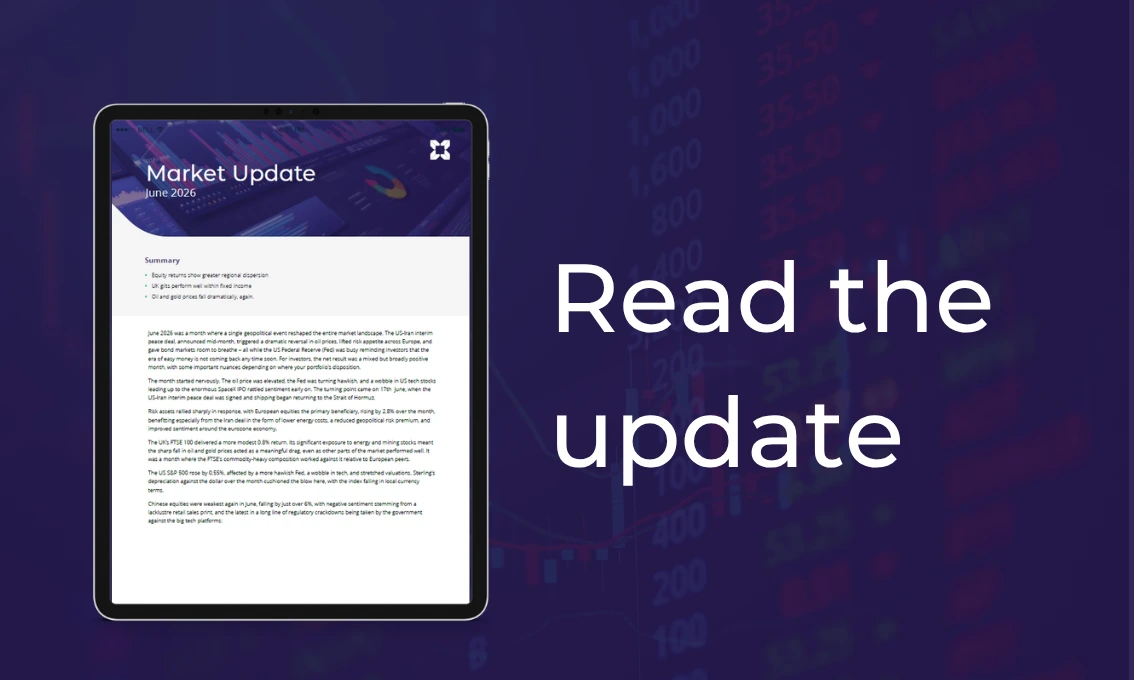
June 2026 was a month where a single geopolitical event reshaped the entire market landscape. The US-Iran interim peace deal, announced mid-month, triggered a dramatic reversal in oil prices, lifted risk appetite across Europe, and gave bond markets room to breathe – all while the US Federal Reserve (Fed) was busy reminding investors that the era of easy money is not coming back any time soon. For investors, the net result was a mixed but broadly positive month, with some important nuances depending on where your portfolio’s disposition.
The month started nervously. The oil price was elevated, the Fed was turning hawkish, and a wobble in US tech stocks leading up to the enormous SpaceX IPO rattled sentiment early on. The turning point came on 17th June, when the US-Iran interim peace deal was signed and shipping began returning to the Strait of Hormuz.
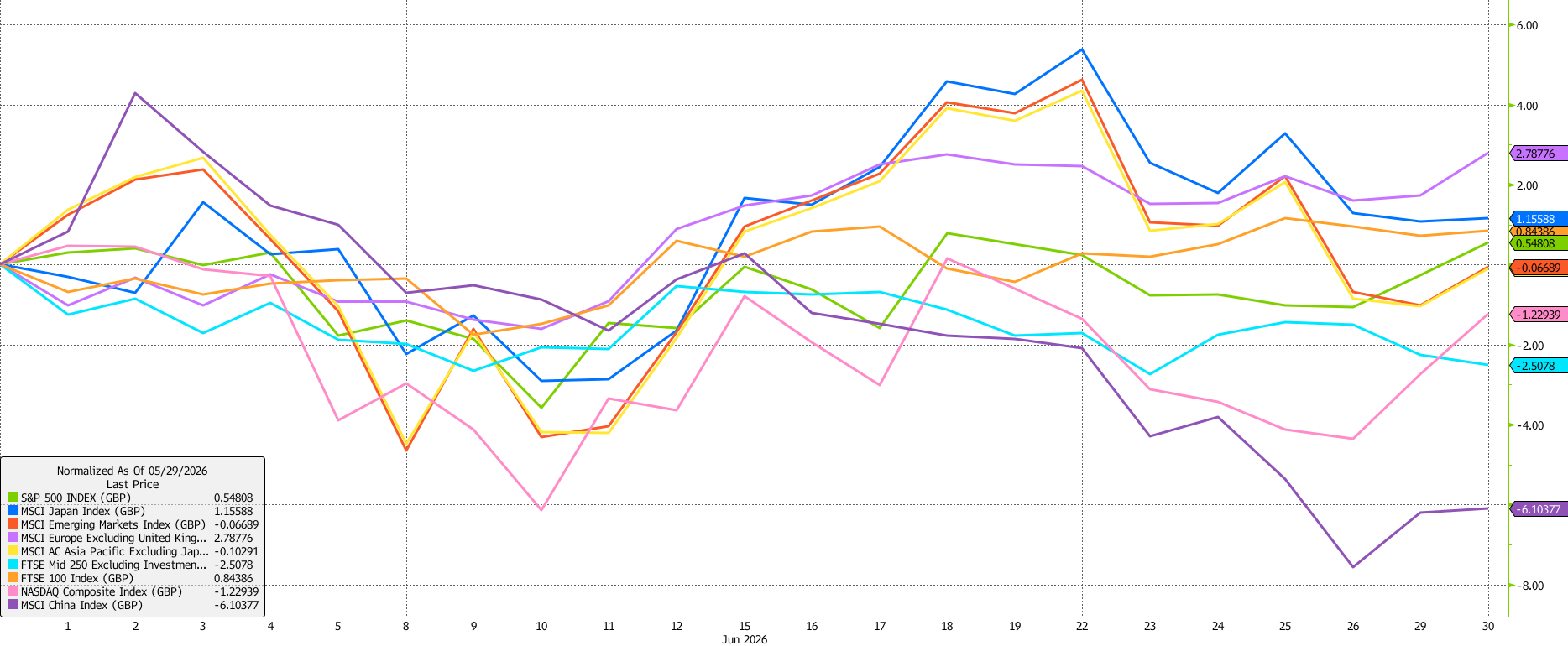
Risk assets rallied sharply in response, with European equities the primary beneficiary, rising by 2.8% over the month, benefitting especially from the Iran deal in the form of lower energy costs, a reduced geopolitical risk premium, and improved sentiment around the eurozone economy.
The UK’s FTSE 100 delivered a more modest 0.8% return. Its significant exposure to energy and mining stocks meant the sharp fall in oil and gold prices acted as a meaningful drag, even as other parts of the market performed well. It was a month where the FTSE’s commodity-heavy composition worked against it relative to European peers.
The US S&P 500 rose by 0.55%, affected by a more hawkish Fed, a wobble in tech, and stretched valuations. Sterling’s depreciation against the dollar over the month cushioned the blow here, with the index falling in local currency terms.
Chinese equities were weakest again in June, falling by just over 6%, with negative sentiment stemming from a lacklustre retail sales print, and the latest in a long line of regulatory crackdowns being taken by the government against the big tech platforms:
The bond market told two quite different stories in June, depending on which side of the Atlantic you were looking at.
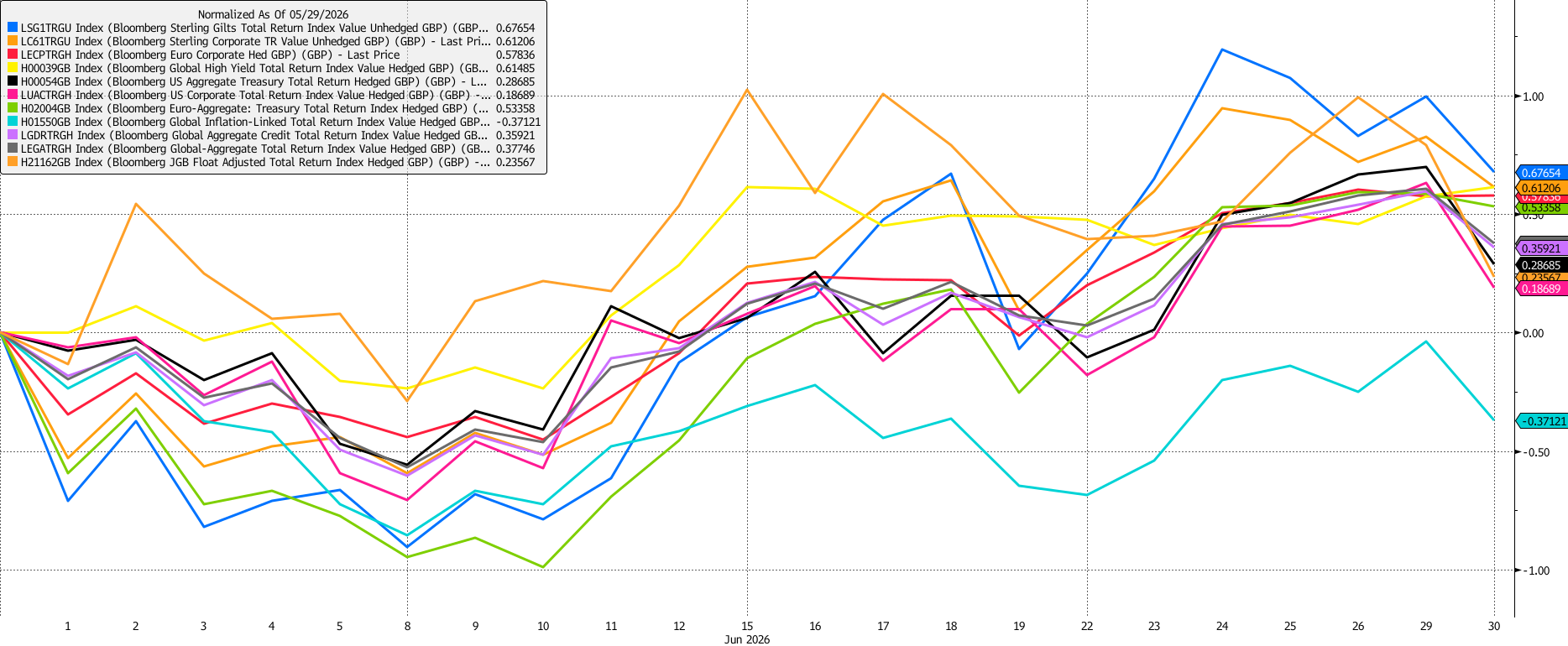
UK gilts had a good month, rising by 0.7% as the 10-year gilt yield fell from 4.81% to 4.76%. The combination of falling energy prices (disinflationary for the UK economy), softer domestic data, and the broader global risk-off tone in the first half of the month all supported gilts. The Iran deal and the subsequent collapse in oil prices reinforced the view that UK inflation pressures could ease more quickly than feared, giving the Bank of England more room to manoeuvre.
US Treasuries had a more muted month, rising by just 0.3% as the 10-year Treasury yield edged upwards in a volatile month. The month opened with a blowout US jobs report that sent traders scrambling to price in Fed rate hikes, while the first FOMC meeting under new Fed Chair Kevin Warsh struck a notably hawkish tone, with half the committee pencilling in at least one rate increase this year. Several Fed speakers, including Dallas Fed President Lorie Logan and Minneapolis Fed President Kashkari, reinforced the message that inflation risks remain skewed to the upside. By month-end, markets were even pricing a non-trivial probability of a July hike. A late-month reading on the Fed’s preferred inflation gauge came in softer than expected, which provided some relief, but the overall direction of travel for US rates has been clearly upward:
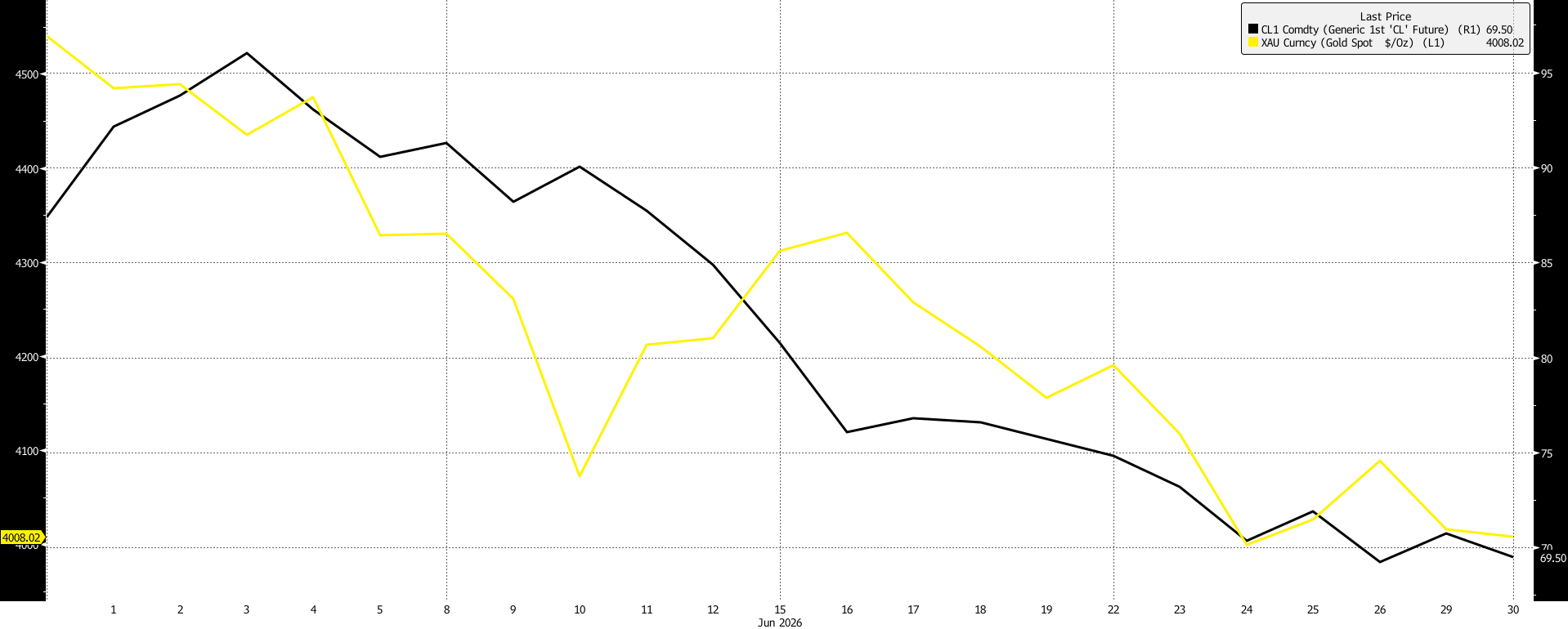
Commodities were once again the most dramatic story of June. Brent crude entered the month at around $90 a barrel — elevated by the ongoing US-Iran conflict and fears of a prolonged disruption to Hormuz shipping. By month-end it had fallen to $70, a decline of over 20% (black line in chart below). That is an extraordinary move in a single month, and it was almost entirely driven by the peace deal and the progressive reopening of the Strait of Hormuz. By mid-month, around half of the stranded daily oil volumes had been restored, and markets moved quickly to price in a return to full supply.
The gold price fell sharply again too, dropping from around $4,540 to just over $4,008 per ounce – a decline of nearly 12%. The combination of reduced geopolitical risk premium, a stronger dollar, and a hawkish Fed (which raises the opportunity cost of holding non-yielding assets) all weighed heavily on the metal. The precious metals complex more broadly has struggled since the war in Iran broke out, but prices have formed something of a bottom over the last month and have shown signs of life so far in July as their medium-term structural drivers remain intact.
For UK investors, the commodity selloff has a silver lining beyond the portfolio level. Cheaper oil feeds directly into lower petrol prices and reduced input costs across the economy, which should help bring UK CPI down over the coming months – a meaningful positive for the domestic inflation outlook and for the Bank of England’s room to act.
June was ultimately a month of two competing forces: a significant easing of geopolitical risk on one hand, and a hawkish reset in US monetary policy on the other. The Iran deal was the single most important market event — it crushed oil prices, supported European equities, and shifted the global inflation outlook in a more benign direction. But the Fed’s hawkish pivot is a genuine headwind that markets are still digesting, particularly for US fixed income and growth assets.
For UK investors specifically, the month offered some genuine positives: gilt yields fell, and lower energy prices are good news for the domestic economy and the inflation outlook. The main headwind was dollar strength eating into the value of sterling, though this paradoxically cushioned returns on US assets. Looking ahead, the key questions are whether the Fed follows through with rate hikes, whether the Iran deal holds through its 60-day negotiating window, and whether the Bank of England feels confident enough to resume its own easing cycle. June gave us plenty to think about on all three fronts.
| Match me to an adviser | Our advisers |
The value of investments may fluctuate in price or value and you may get back less than the amount originally invested. Past performance is not a guide to the future. The views expressed in this publication represent those of the author and do not constitute financial advice.
For further information, please contact:
For further information, please contact:

