
Oliver Stone
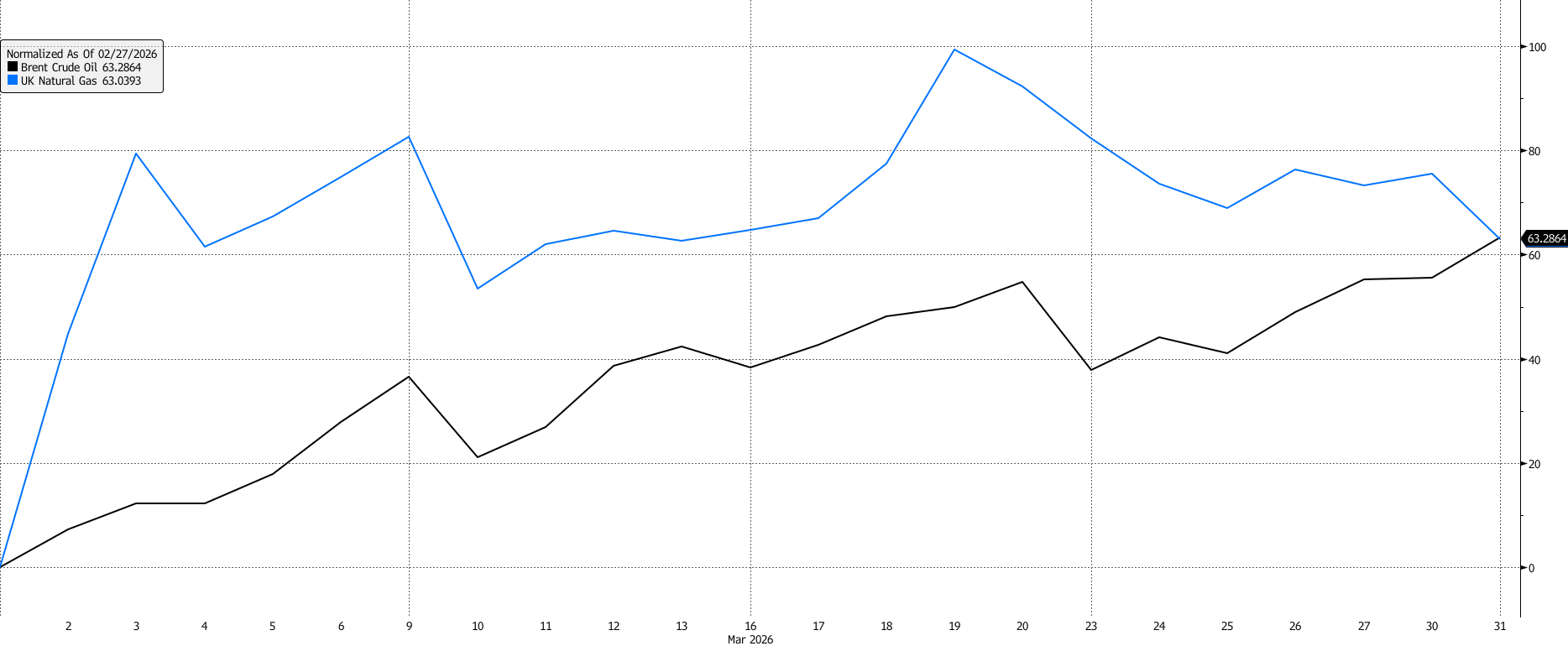
March 2026 will be remembered as one of the most volatile months in recent market history, and it all came down to what was happening in the Middle East. The conflict involving the US, Israel, and Iran escalated dramatically during the month, culminating in the closure of the Strait of Hormuz—one of the world’s most critical oil and gas shipping routes. This wasn’t just a geopolitical headline; it had immediate and severe consequences for global energy markets.
Oil prices surged as cargo flows through the strait were disrupted, sending shockwaves through supply chains worldwide. The energy shock was swift and brutal, with petroleum products leading the charge higher. By mid-March, the situation looked increasingly dire, with the US deploying three additional warships and more Marines to the region around March 20th, which only added to market anxiety.
However, as March drew to a close and we moved into April there were some tentative signs of hope as a fragile ceasefire agreement was reached between the two sides, resulting in a very strong, positive market reaction. The ceasefire is planned to last for two weeks with US and Iranian negotiators meeting from Friday 10th April.
While the situation undoubtedly remains fluid and uncertain, this shift in tone has helped to ease some of the panic that had gripped markets earlier in the month. Still, some damage has been done—energy costs have already spiked, inflation has started to trend higher, all of which leaves the world’s central banks caught between a rock and a hard place.
Central bankers had a truly miserable March, caught in a classic policy bind: fight inflation caused by an energy shock, or protect economic growth that’s already looking fragile?
The whiplash in market expectations told the story. The Federal Reserve held rates steady at 3.75% and spoke about “looking through” the energy shock, while the Bank of England took a tougher line, saying it “stands ready to act” against inflation in its first unanimous vote in four and a half years. The European Central Bank were the most explicit, speaking of standing ready to raise interest rates if needed to combat inflation. Here, rate hike expectations swung wildly from fully priced to just 50-50 odds by the month-end.
All that uncertainty wasn’t happening in a vacuum—inflation data was trending higher. The euro area saw its biggest jump in inflation since 2022, rising to 2.5% year-over-year in March from 1.9% in February. Germany hit 2.8% as energy costs rocketed 7.2% higher, while French inflation nearly doubled from 0.9% to 1.7% in a single month. Even US wholesale prices accelerated unexpectedly, rising 0.7% month-over-month in February—before the worst of the energy shock hit.
With all this uncertainty swirling around—war, inflation, confused central banks—it’s no surprise that stock markets had a very weak March. For UK investors, despite a weaker pound helping translated equity returns, losses were painful across the board.
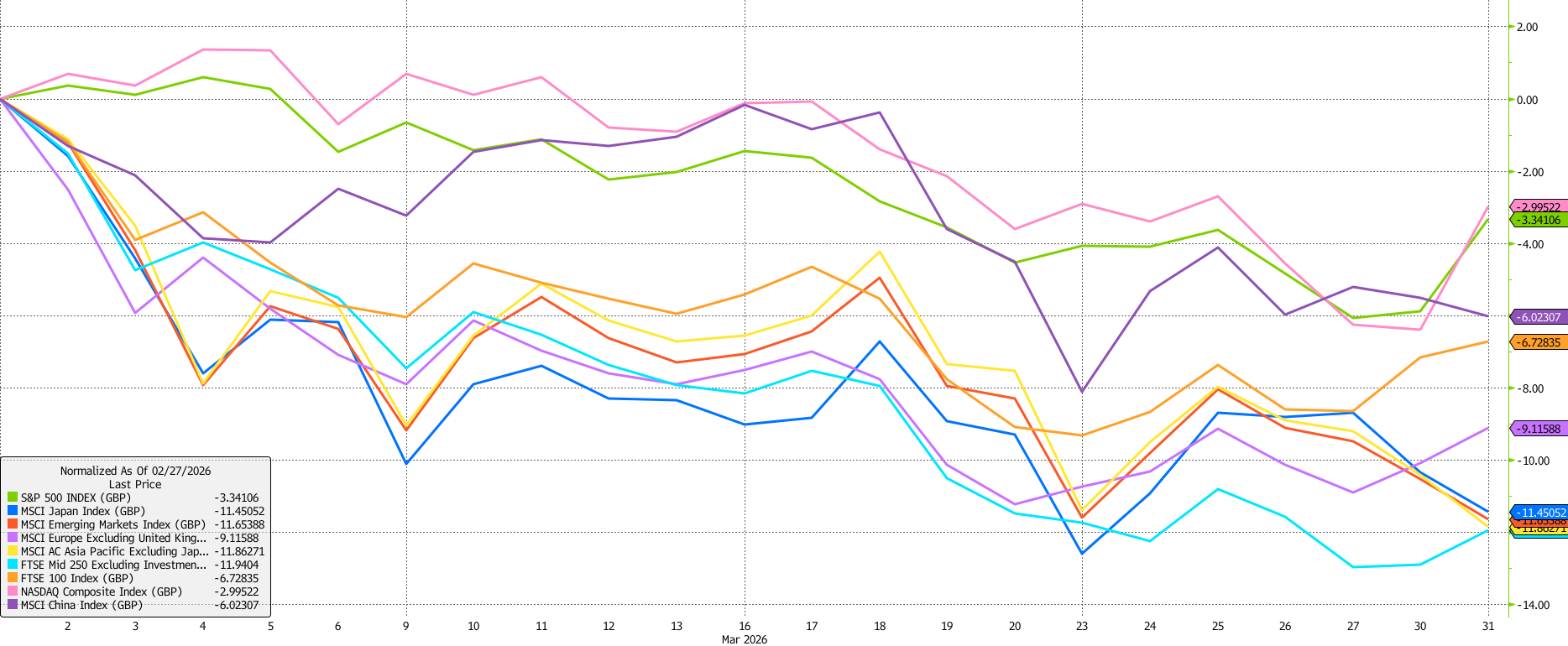
The US outperformed other regions handily over the month with the S&P 500 falling by 3.3% and the NASDAQ by just under 3% (green and pink lines respectively in the chart below), as investors judged the region to be relatively insulated to the energy price shocks versus other regions as a massive producer of oil and gas.
Elsewhere there was little good news as developed and emerging market regions struggled to a greater or lesser extent. The FTSE 100 fell by 6.7% (light orange line), European equities by more than 9% (light purple line), and Japanese stocks (blue line) by nearly 11.5%.
Emerging markets bore the brunt of the sell-off, (yellow line) with the region typically more sensitive to energy shocks and tending to suffer more when global growth looks shaky. The worst of the equity selling came around March 20th when news broke about additional US military deployments to the Middle East. That triggered a large risk-off move, with investors dumping stocks and fleeing to safety.
There was a brief rally attempt right at the end of the month and into early April as ceasefire hopes emerged, but that came too late to salvage March’s performance.
Government bond yields swung wildly as investors tried to figure out whether inflation or recession was the bigger threat.
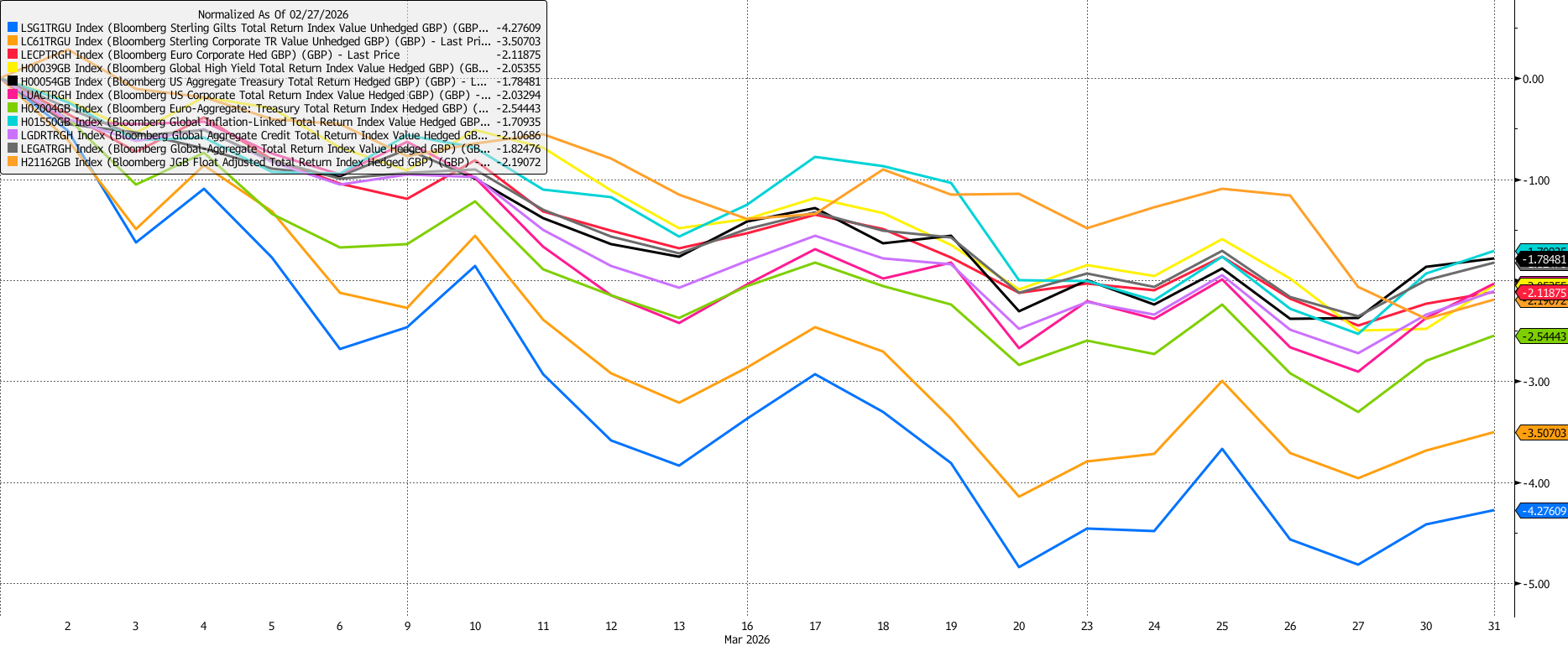
Sterling assets and particularly UK Gilts had a wild ride as investors judged the UK economy and UK assets to be at heightened risk from higher energy prices and inflation. The 10-year Gilt yield started March around 4.37%, then surged to nearly 5.00% on March 20th after the Bank of England’s hawkish turn; a very large move in a short space of time. Yields fell slightly into the end of the month but per the chart below (blue line) Gilts ended the month down more than 4% in price terms.
US Treasuries followed a similar pattern. The 10-year yield climbed from about 4.04% at the start of March to a peak of 4.43% on March 27th, before ending at 4.32%. This equated to a benchmark index loss of around 1.7% (black line).
The pattern was consistent: inflation fears drove yields sharply higher in the first three weeks of March, then growth concerns brought them back down a bit in the final week. For bond investors, it was an exhausting month of trying to anticipate which risk would dominate.
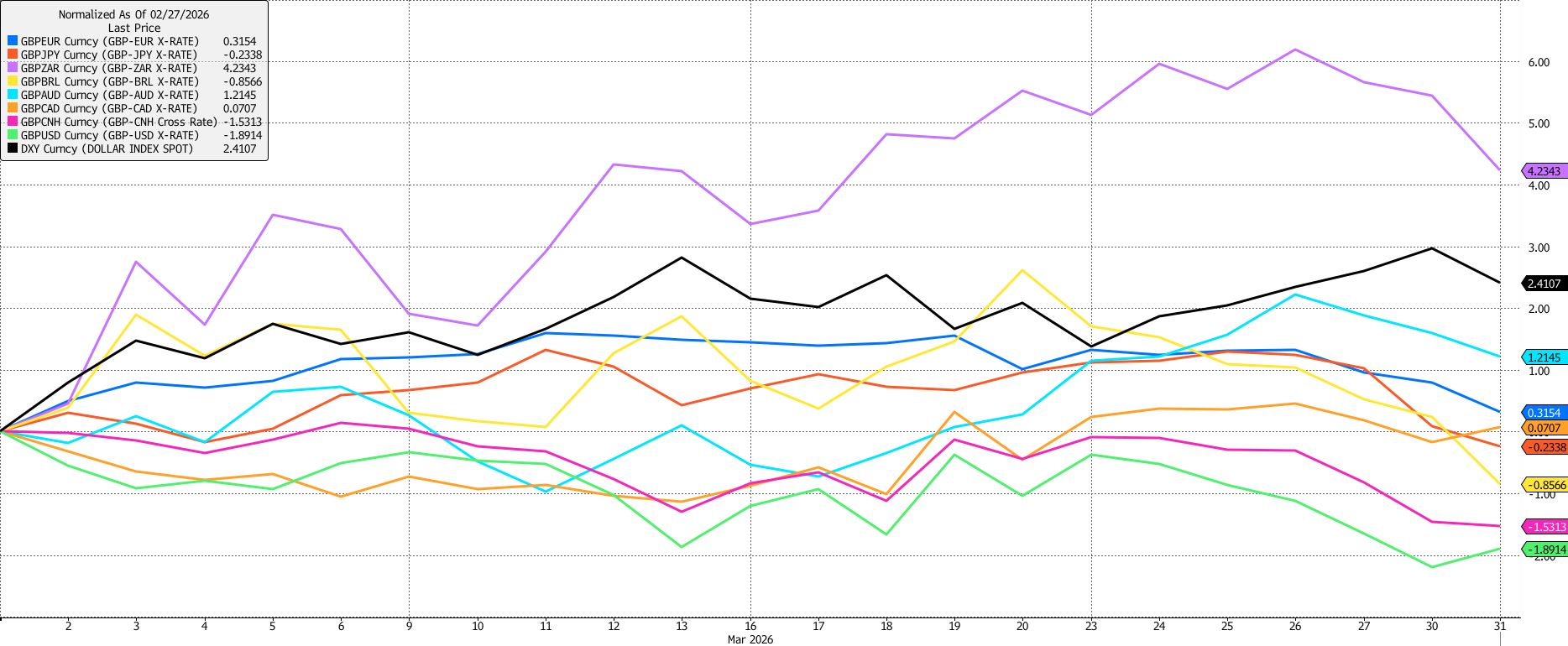
In currency markets, sterling had a mixed month, with performance delineated by investors’ perceptions of the Middle East crisis impact. Most notably, the pound fell sharply against the US dollar (green line) by 1.9% which reflected a flight to dollar safety. The greenback benefitted from its traditional safe-haven status despite the Fed’s cautious policy stance, with dollar strength pervasive across the complex.
The currency moves underscored how, in times of genuine crisis, traditional safe-haven flows can trump interest rate differentials—even the BoE’s hawkish rhetoric couldn’t prevent sterling from weakening as investors prioritised capital preservation over yield:
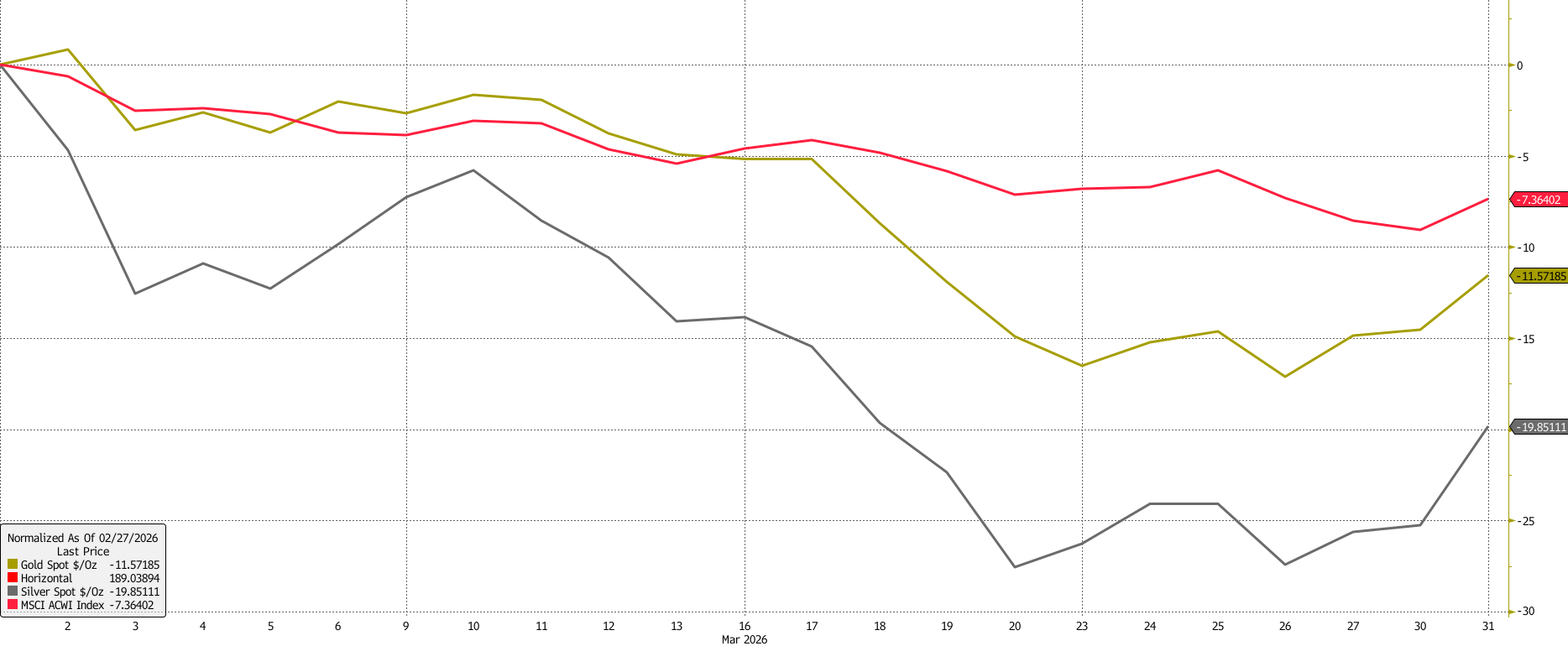
The precious metals complex had a surprisingly rough month, defying their traditional safe-haven status. Gold fell for nine consecutive days during the month as inflation fears and expectations for higher interest rates outweighed safe-haven demand. The metal tumbled from highs above $5,350 per ounce in early March to intra-day lows near $4,100, before recovering somewhat to end the month around $4,680.
Silver was hit even harder, tumbling more than 10% at one point on March 23rd and falling from nearly $89 per ounce to lows around $67, before ending March at approximately $75. The selloff reflected the fact that rising real interest rates are a headwind for non-yielding precious metals, even in times of geopolitical stress.
As we move through April, uncertainty remains with us. A fragile ceasefire has been agreed in the Middle East which would be hugely positive if it holds. But central banks are still stuck in a tricky position, trying to balance inflation risks against growth concerns.
We think it’s sensible to expect continued volatility in equity markets until we get more clarity on both the geopolitical situation and what central banks are actually going to do. On that latter point, the next few weeks will be crucial. Central banks meet again in late April, and we’ll get more clarity on whether the Middle East situation is truly stabilising or just in a temporary lull. The tug-of-war between inflation control and growth preservation will likely determine where markets go from here.
| Match me to an adviser | Our advisers |
The value of investments may fluctuate in price or value and you may get back less than the amount originally invested. Past performance is not a guide to the future. The views expressed in this publication represent those of the author and do not constitute financial advice.
For further information, please contact:
For further information, please contact:

