
Savings & investment

Harry Scargill
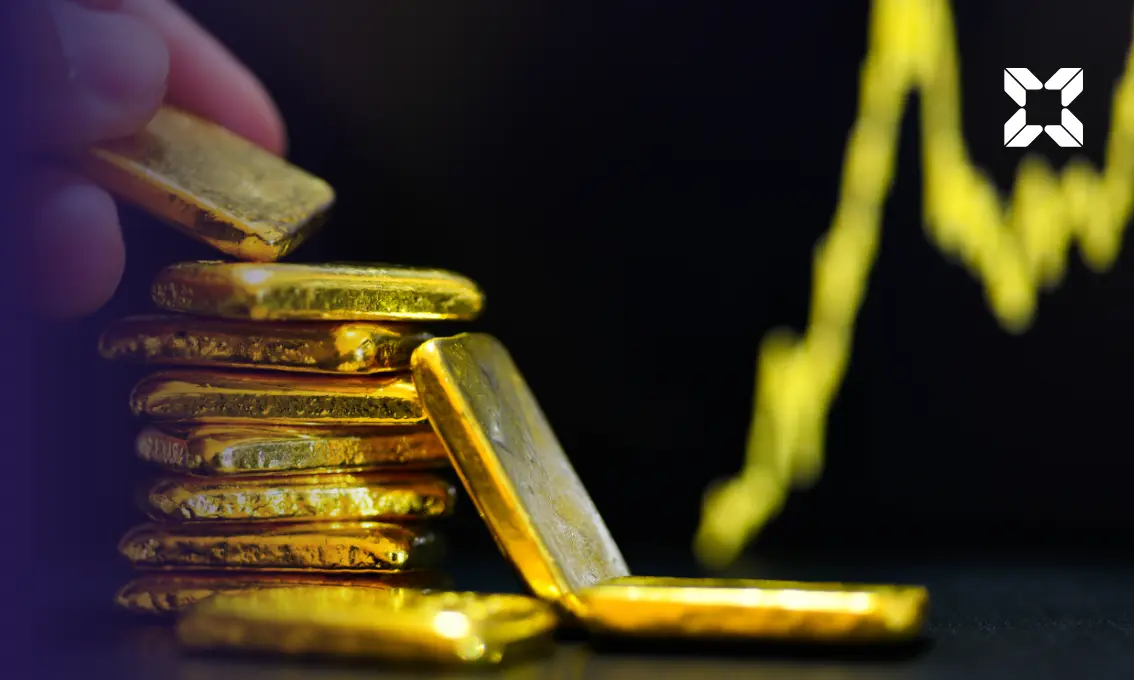
Over recent months, we have seen commodities investing move firmly into the spotlight.
Gold has been front and centre of the conversation, but it’s not the only area attracting attention.
We have also seen growing interest in energy, industrial metals and agricultural markets, as these assets tend to re-enter the discussion when investors are thinking about inflation resilience, geopolitical uncertainty, or simply improving diversification in a balanced portfolio.
Commodities can play a useful role in portfolios, but they are also easy to misunderstand.
Prices can be volatile, different commodities behave in very different ways, and the route you choose – owning the commodity itself versus investing in the companies that produce it – can materially change the risk and return profile.
Here we set out the key points to help investors and advisers frame the discussion sensibly.
Gold has a long history as a defensive asset.
Unlike shares or bonds, it isn’t linked to the fortunes of a single company or government, and it doesn’t rely on an issuer’s promise to pay.
The “no-one else’s liability” feature is one reason investors often gravitate towards gold when confidence is shaken.
Gold is also scarce, durable and globally recognised, which helps explain why it has been treated as a store of value over time.
In periods where inflation worries rise, geopolitical risk intensifies, or markets become unsettled, gold can attract demand as a form of insurance within a broader portfolio.
Interest rates are another important influence.
Gold doesn’t produce an income, so it can look more attractive when the return available on cash and bonds (after inflation) feels less compelling.
When that “opportunity cost” falls, investors can be more willing to hold an asset whose value is driven primarily by supply and demand, rather than by income.
The key caveat is that “safe haven” does not mean “always goes up when markets fall”, and it certainly does not mean “low volatility”.
Gold can experience sharp drawdowns, and there are periods where it falls alongside risk assets – particularly when investors are rushing to sell all assets, the US dollar strengthens, or real (inflation-adjusted) interest rates rise.
Recent price action is a timely reminder of this volatility.
Gold’s strong rise has been accompanied by larger day-to-day moves than many investors associate with a defensive holding.
When investor positioning becomes crowded, or when flows into and out of exchange-traded products accelerate, price action can become more reactive and caught up with broader shifts in sentiment.
The key message really is that gold can be a useful diversifier and a potential stabiliser in certain environments. However, but it should be held with realistic expectations.
It is not a guaranteed hedge, and it can be volatile.
When investors talk about “commodities”, they can be referring to a wide range of assets.
Broadly, the exposure tends to fall into a few categories as follows:
These are closely linked to global growth, manufacturing and infrastructure spending.
They can benefit when global growth is positive, activity is strong and are often associated with long-term themes such as electrification, grid upgrades and more recently the data-centre build-out.
The trade-off is cyclicality: industrial metals can fall sharply when growth slows, or demand expectations weaken.
These are typically among the most economically sensitive commodity exposures.
Energy prices respond quickly to supply disruptions, geopolitics and production decisions – as we have seen in recent weeks with events in the Middle East.
For investors, energy can sometimes offer inflation sensitivity, because energy costs feed directly into wider price pressures.
However, energy markets are among the most volatile, with rapid swings driven by events rather than gradual fundamentals.
Risks can therefore be driven quite dramatically by timing, and reversals can be sudden.
Agriculture is driven by a different set of factors – weather patterns, crop yields, fertiliser costs and trade policy. This can make it appealing from a diversification perspective.
The drawback is unpredictability: weather and seasonality can create sharp price moves, and local disruptions or policy decisions can have outsized effects.
These metals can behave quite differently from gold.
Silver, for example, has both “monetary” characteristics and meaningful industrial demand (solar panels and datacentres as examples). This can make it more sensitive to the economic cycle.
Platinum and palladium have also historically been tied to industrial uses and evolving technology trends.
These markets can be smaller and less liquid than gold, which can mean more volatility.
Commodities are rarely a “core” holding like equities or bonds, but they can play valuable supporting roles when used thoughtfully and sized appropriately.
Commodity returns are often driven by different forces, supply constraints, weather, geopolitics and inventory cycles.
This can help diversify a portfolio that is otherwise dominated by equity and interest-rate risk.
Commodities sit closer to the real economy. In certain inflationary environments, they can help offset the impact of rising input costs and price pressures. This is particularly the case with energy and some industrial commodities.
That said, outcomes vary significantly by period and by commodity.
Gold can provide a form of insurance in certain types of market stress, especially where confidence in currencies or financial stability is questioned.
However, insurance is not free: gold can underperform for long stretches and may disappoint in some equity drawdowns.
Commodities can deliver strong returns when supply is constrained, demand surprises to the upside, or inflation shocks push prices higher.
However, these periods can be episodic rather than steady. It is important not to extrapolate short-term performance into a long-term expectation.
There are two main ways investors can access exposure to commodities with each having its own advantages and disadvantages.
This is typically achieved through exchange-traded products or funds that provide exposure either to the physical commodity (more common for precious metals) or via futures markets (common for energy, industrial metals and broad commodity baskets).
Direct exposure can provide a cleaner link to commodity prices and may be more effective for diversification and inflation sensitivity.
However, futures-based exposure can introduce additional drivers of return, particularly the mechanics of rolling futures contracts.
The alternative route is to invest in the companies that produce the commodity.
This can provide potentially higher returns and operational leverage when commodity prices rise.
However, it also introduces equity market risk and company-specific factors such as costs, debt levels, regulation, politics, management decisions and broader market sentiment.
Commodities can be a helpful portfolio tool, but they require careful sizing and clear expectations.
Volatility can rise quickly, individual commodities can behave very differently, and product structure matters.
For UK investors, currency is another consideration. Many commodities are priced in US dollars, so currency moves can materially influence returns.
Commodities can offer diversification, inflation sensitivity and, in the case of gold, a potential form of portfolio insurance.
But they are not a one-way bet, and recent moves in gold are a reminder that even “defensive” assets can be volatile.
The most important decisions are not just whether to invest in commodities, but which exposures to use, how to access them, and how much is appropriate given an investor’s objectives and risk tolerance.
An expert financial adviser can help you decide whether investing in commodities is right for you, your circumstances and your approach to investment risk.
Get in touch with one of our advisers today to find out more.
Disclaimer: This article is for informational purposes only and does not constitute financial, tax, or legal advice. Tax treatment depends on individual circumstances and may change. The value of investments can go down as well as up and you may not get back the full amount you invested. Past performance is also not a reliable indicator of future performance. Always seek professional advice before making financial decisions.
| Match me to an adviser | Subscribe to receive updates |
Gold is often considered a safe haven because it is not tied to any single government or company and has historically retained value during market stress. However, it can still be volatile and does not always rise during equity downturns.
Some commodities, particularly energy and industrial metals, can perform well during inflationary periods because rising input costs push prices higher. However, performance varies by commodity and economic cycle.
Direct commodity exposure (often via ETFs or futures) tracks the price of the commodity itself. Mining or energy stocks are equities and carry company-specific risks such as management decisions, debt levels and broader stock market movements.
Commodities can play a supporting role in a diversified portfolio, particularly for inflation sensitivity and diversification. They are typically not core holdings and should be sized appropriately given their volatility.
Because most commodities are priced in US dollars, currency movements can significantly impact returns for UK investors. A strengthening pound can reduce returns, while a weakening pound can enhance them.
For further information, please contact:
For further information, please contact: